Why Dogs Refuse New Beds And How to Make Their Bed Feel Safe and Familiar
Posted on : 22/05/2026
You spent time picking out a new bed for your pup. Maybe you researched the materials, checked the sizing, and made sure it’d suit your dog’s age and breed. And now it’s sitting on the floor, completely ignored, while your dog is sprawled out on the tiles next to it.
It’s not uncommon for a dog to refuse a new bed, but it can be frustrating. It’s important to know it’s almost never because you chose the wrong one; it usually comes down to how dogs experience the world. Once you understand that, the fix is pretty straightforward.
Key Takeaways
- Dogs are wired to trust scent above almost everything else. A new bed simply doesn’t smell like them yet.
- Physical differences in height, firmness, or texture can also cause hesitation, especially in older or anxious dogs.
- Placing the bed in a familiar spot, adding a known-scent item, and rewarding small interactions with the bed can help a lot.
- Most dogs come around within a few days to a few weeks with patient, low-pressure encouragement.
- If the bed was second-hand, a wash before introduction can help remove unfamiliar odours.
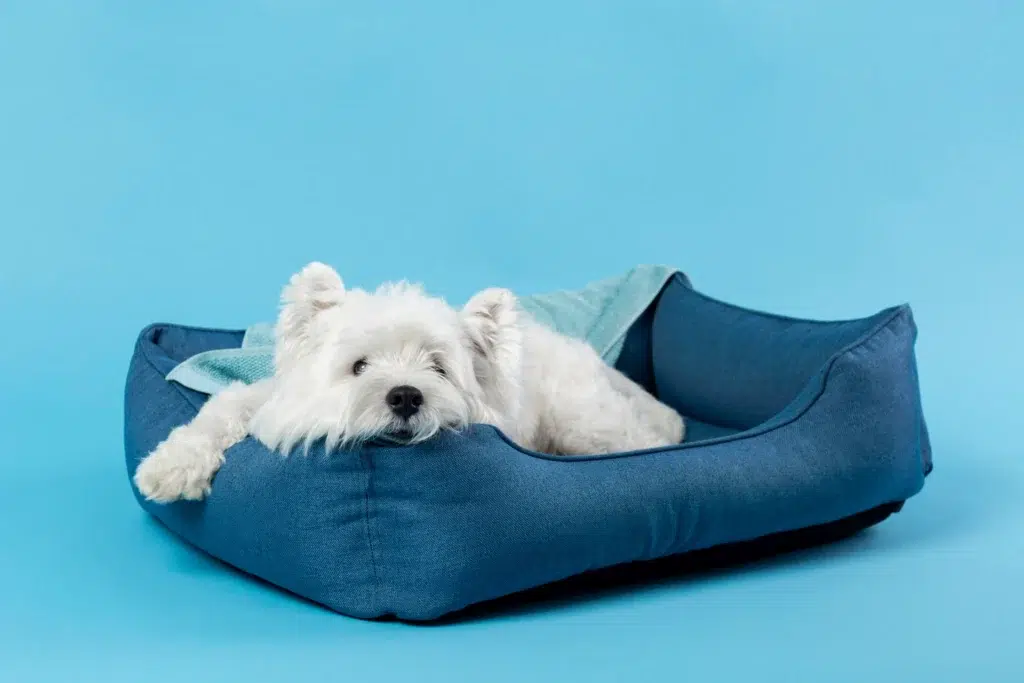
It’s All About Scent
Here’s the thing about dogs: their noses do far more work than we give them credit for. Dogs have roughly 40 times as many smell-sensitive receptors as humans. That means scent isn’t just a sense for them, it’s how they determine safety, familiarity, and belonging.
Their old bed, even a tatty one that’s seen better days, carries months or years of accumulated scent signals: their own, yours, the family’s. That familiar scent is what makes a bed feel like a safe territory. A brand-new bed, by contrast, smells like packaging, manufacturing, or (if it’s second-hand) like a complete stranger. To your dog, that’s not a place to relax. That’s an unknown object in their home.
The pads on a dog’s paws contain scent glands, which are part of why dogs scratch and circle before settling – they’re actively depositing their own scent to claim the space as theirs. A new bed hasn’t had any of that happen yet. Give it time, and it will.
Physical Comfort Matters Too
Scent is usually the main culprit, but it’s not always the whole story. If a bed feels too warm, too firm, or too far from you, a dog might reject it entirely.
This is worth paying attention to, depending on your dog’s age and health. Senior dogs dealing with arthritis or hip stiffness often struggle with beds that are too low to the ground or too soft to push up from. Joint pain can make even an otherwise comfortable bed feel like hard work, and dogs that are punished in or near their bed can also develop negative associations with it.
Breed and size play a role, too. Larger, cool-preferring breeds like Huskies and German Shepherds often stretch out on cold floors to regulate their body heat, while smaller dogs tend to seek snug, warm spots that retain heat. If the new bed doesn’t match what your dog naturally gravitates toward, they’ll keep gravitating somewhere else.
And if a previously happy bed-user suddenly starts avoiding their bed with no obvious reason, it’s worth a vet check. A change in sleeping behaviour can sometimes signal an underlying health issue.
Second-Hand Beds: An Extra Layer to Address
Second-hand beds can be a great, affordable option, but they do come with an additional challenge. Another dog’s scent, or even just the smell of a previous home’s washing powder, can be off-putting.
A thorough wash of the cover before introducing the bed removes the bulk of those foreign odours and gives your dog a more neutral surface to start claiming as their own. Once it’s clean, follow the same steps below for any new bed introduction.
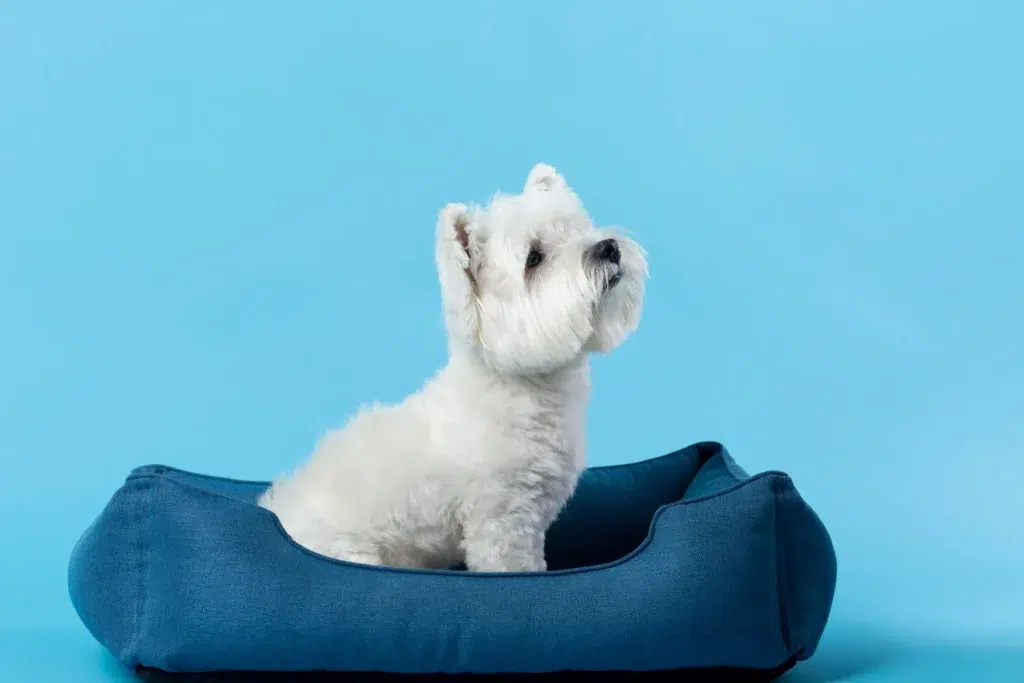
How to Help Your Dog Accept Their New Bed
Start with a familiar scent
This is the single most effective thing you can do. Rub your hands over the bed to transfer your scent, or place a worn t-shirt or old blanket on top. You can even sit on it or hold it on your lap from time to time to help with scent transfer and build trust. Your scent is one of the most reassuring signals your dog knows – it tells them this object is part of their world, not an intrusion into it.
If you still have the dog’s old bed, you can also transfer a cover or blanket from the old bed to the new one before removing the old bed entirely. That scent bridge can make the transition feel much less abrupt.
Place it in the right spot
Put the new bed in exactly the same spot as the old one. Dogs are creatures of habit, and the location of a sleep spot carries as much comfort as the bed itself. Moving the sleeping spot AND introducing a new bed at the same time is asking for twice the adjustment.
If your dog didn’t have a dedicated spot before, watch where they naturally settle and put the bed there.
Let them explore on their own terms
Don’t lift your dog onto the bed or try to coax them onto it with too much enthusiasm. Let them sniff it, step on it, or walk past it without any pressure. Dogs often need a few days or even weeks before they fully accept a new bed as part of their routine.
Reward every small win
Positive reinforcement is the fastest way to build a good association. Each time your dog sniffs the bed, steps on it, or even just sits nearby, offer calm praise and a small treat. You’re building a connection between the bed and something good. Once that clicks, the bed becomes part of their routine rather than something unfamiliar to avoid.
Keep the old bed out of sight (if possible)
If the old bed is still visible and accessible, it’s harder for a dog to shift their attention to the new one. If the old bed is still usable, tuck it away for a week or two while the new one gets established.
What to Expect
Most dogs settle into a new bed within a few days to a few weeks, depending on their personality and history. Rescue dogs or anxious dogs may take a little longer, and that’s completely normal. Dogs with past trauma may link certain textures or locations with discomfort, so patience and gentle reintroduction help them feel safe.
The key is consistency without pressure. Leave the bed where it is, keep rewarding interactions with it, and let your dog set the pace.
Finding the Right Bed in the First Place
Some of this can be avoided by choosing a bed that suits your dog’s needs from the start, which means thinking beyond just size. A large, deep-sided bolster bed might be perfect for an anxious dog who likes to curl up tight, but it’s not ideal for a senior Labrador with stiff hips who needs a lower entry and firmer support. A flat mat or cooling pad might be exactly right for a Staffy in a warm Queensland home, but entirely wrong for a small Maltese in a Melbourne winter.
At Superior Pet Goods, we design our range specifically with Australian dogs and Australian conditions in mind. Whether your dog needs orthopaedic support, a raised bed for airflow, a waterproof option for outdoors, or a cosy bolster to curl into, our beds are built around what dogs actually need, not just what looks good in a living room.
Explore the full range and find a bed your dog will want to use.