
New Puppy Checklist
Posted on : 19/12/2025
You’ve said yes to those puppy dog eyes, and now reality’s hitting – your new mate arrives in a week, and you’re wondering if you’ve forgotten something crucial. Spoiler: you probably have. But that’s exactly why this checklist exists.
Bringing home a puppy isn’t just about buying cute bowls and soft toys. It’s about creating a safe space, preparing your family, and setting routines before that bundle of chaos bounds through your door at 2am wanting to play.
Preparation Must-Dos
- Puppy-proof your home before arrival – get down on your hands and knees to spot hazards at puppy eye level
- Stock essential supplies – food, bowls, bed, crate, collar, lead, and enzymatic cleaner (you’ll need it)
- Prepare your family – agree on rules, responsibilities, and boundaries before the puppy arrives
- Set up routines from day one – feeding times, toilet breaks, and sleep schedules help puppies settle faster
- Book a vet visit within 48 hours of bringing your puppy home for a health check and vaccination schedule

Before Your Puppy Arrives: The Foundation Work
Puppy-Proof Every Room
Your home is basically a minefield for curious puppies who explore everything with their mouths. Get down to puppy level – literally, hands and knees – and scan each room.
Remove or secure:
- Electrical cords (tape them down or cover with cord protectors)
- Toxic plants like lilies, azaleas, and sago palms
- Medications, cleaning products, and chemicals
- Small objects they can swallow (coins, rubber bands, hair ties, kids’ toys)
- Rubbish bins (invest in ones with secure lids)
- Shoes, remote controls, and anything leather or plastic
Secure outdoor areas:
- Check fences for gaps – puppies can squeeze through surprisingly small spaces
- Remove or fence off pool areas
- Store garden tools, fertilisers, and snail bait out of reach
- Check for poisonous garden plants
Set Up Your Puppy’s Safe Zone
Before pickup day, establish a dedicated area where your puppy will eat, sleep, and feel secure. This could be a laundry, a corner of the kitchen, or a section of your living room.
Your puppy’s zone needs:
- A comfortable bed
- Soft blankets for comfort (ask the breeder for one with familiar scents if possible)
- Food and water bowls in stainless steel or ceramic
- A crate sized so they can stand, turn around, and lie down comfortably
- Puppy training pads near the door or designated toilet spot
- A few safe toys for comfort and entertainment
Australian homes can get hot, so position your puppy’s bed away from direct sunlight and ensure good airflow. In winter, keep their sleeping area away from drafts.
Prepare Your Family
This step gets skipped constantly, and it’s why puppies end up confused about house rules. Before the puppy arrives, sit down with everyone in your household.
Discuss and agree on:
- Where the puppy can and can’t go (upstairs? On furniture? In bedrooms?)
- Who’s responsible for morning feeds, toilet breaks, and evening walks
- What words you’ll use for training (pick one word per command)
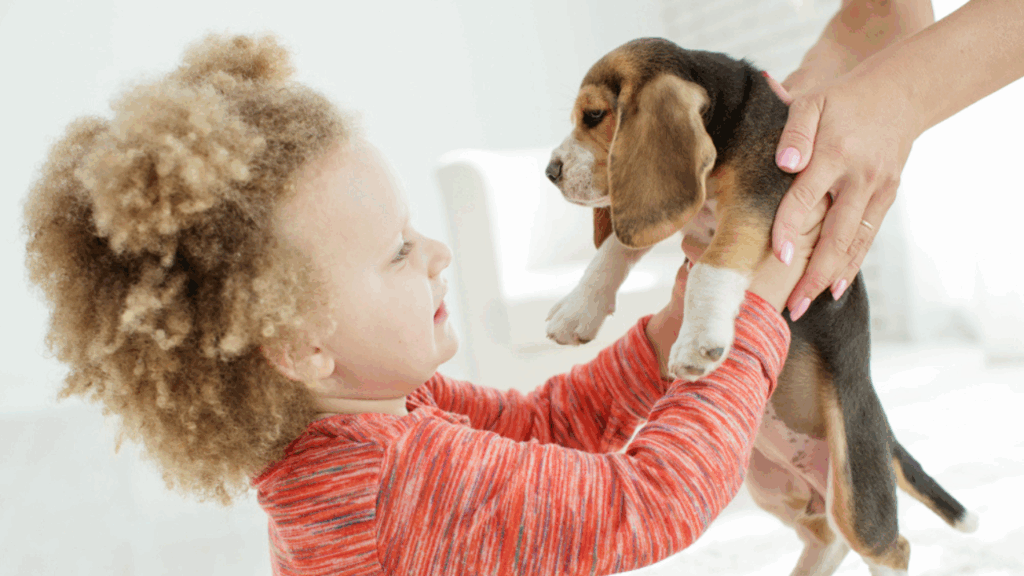
- How to handle children’s interactions with the puppy (no carrying without supervision, no disturbing during meals or sleep)
- House rules the puppy will learn (wait at doors, no jumping on people, etc.)
Small children need to understand that the puppy isn’t a toy and must be treated with care and respect. Supervision is non-negotiable for kids under 8 years old.
Essential Supplies Checklist
The Non-Negotiables
Feeding:
- Quality puppy food that meets AAFCO nutritional standards (widely used internationally as the benchmark for balanced pet nutrition)
- Two bowls – one for food, one for water
- Airtight food storage container
- Small training treats
Safety and Identification:
- Soft collar (you’ll need bigger sizes as they grow)
- Standard lead (avoid retractable leads for puppies)
- ID tag with your phone number
- Microchip (most breeders do this, but verify)
Comfort and Sleep:
- Puppy bed or soft mat (machine-washable cover essential)
- Blankets for bedding and a crate
- Crate appropriate to adult size, simply add a divider for puppies
Toilet Training:
- Puppy training pads
- Enzymatic cleaner for accidents (regular cleaners won’t remove the scent that draws puppies back)
- Biodegradable poo bags and dispenser
- Pooper scooper for the yard
Health and Grooming:
- Puppy-specific shampoo
- Brush suited to your puppy’s coat type
- Nail clippers (or plan vet visits for this initially)
- Dog toothbrush and toothpaste (never use human toothpaste, it’s toxic to dogs)
Toys and Entertainment:
- A variety of chew toys in different textures
- Soft toys for comfort (remove if they start tearing them apart)
- Interactive puzzle toys for mental stimulation
Superior Pet Goods stocks everything from durable puppy beds designed to withstand those early teething months to soft blankets that help create that crucial sense of security. Quality bedding matters – a well-rested puppy is easier to train and settles faster.
Nice-to-Haves
- Puppy playpen for safe confinement
- Baby gates to restrict access to certain rooms
- Car restraint or travel crate
- Treat pouch for training sessions
- Dog first aid kit

The First 24 to 48 Hours: Managing Expectations
Your puppy will be overwhelmed, confused, and likely missing their mum and littermates. The first 48 hours can be overwhelming for the dog as they adjust to their new home, particularly if they’re only 8 weeks old.
What’s normal:
- Whimpering, crying, or howling at night (heartbreaking but expected)
- Toilet accidents every 1–2 hours (their bladders are tiny)
- Confusion about where to go, what to do, and who you are
- Not eating much initially due to stress
- Sleeping a lot between bursts of energy
Your job in the first 48 hours is to keep things calm, quiet and start setting their routine. Let them explore their safe zone at their own pace and don’t punish accidents right away.
Book a vet appointment within these first 48 hours for a health check and to establish a vaccination schedule. Australian vets typically recommend vaccinations at 6–8 weeks, 12 weeks, and 16 weeks.
Common Mistakes to Avoid
- Skipping crate training. Crates aren’t cruel – they’re your puppy’s safe den and your sanity-saver. Never use the crate as punishment.
- Leaving the puppy alone too long. Puppies under 4 months shouldn’t be alone for more than 2 hours. Arrange pet sitters or doggy daycare if needed.
- Inconsistent rules. If your puppy isn’t allowed on the couch as an adult, don’t let them up there as a cute 8-week-old. Mixed messages create confused dogs.
- Delaying socialisation. The first 3–17 weeks of a puppy’s life is a critical period for social and behavioural development. Carry your puppy to experience new sights, sounds, and people before they’re fully vaccinated (just avoid dog parks and ground contact).
- Ignoring their breed needs. A Border Collie puppy needs different mental and physical stimulation than a Cavalier King Charles Spaniel. Research your breed’s specific requirements.
Raising a Happy Puppy From Day One
Creating a welcoming home for your new puppy goes beyond buying supplies — it’s about preparation, patience, and realistic expectations. Those first few weeks are intense, but they set the foundation for your relationship over the next 10–15 years.
At Superior Pet Goods, we understand that quality bedding and comfort items help puppies settle faster and sleep better. When your puppy feels secure and comfortable, training becomes easier and everyone gets more sleep.
Browse our range of puppy-friendly beds, blankets, and accessories designed specifically for Australian conditions — because a well-rested puppy is a happy puppy.
Welcome to the wonderful, chaotic, rewarding world of puppy ownership. You’ve got this.